ABOUT XINJIUDING

A Studio and Foundry Where Art, Engineering, and Making Stay Connected.

Xinjiuding works with artists, designers, institutions, and project teams to develop bronze and metal works from early concepts and models through fabrication, finishing, and delivery. Our role is to understand the intention of each work, resolve the technical questions behind it, and carry it through production with close attention to form, surface, and final presentation.
Company roots dating to 1998
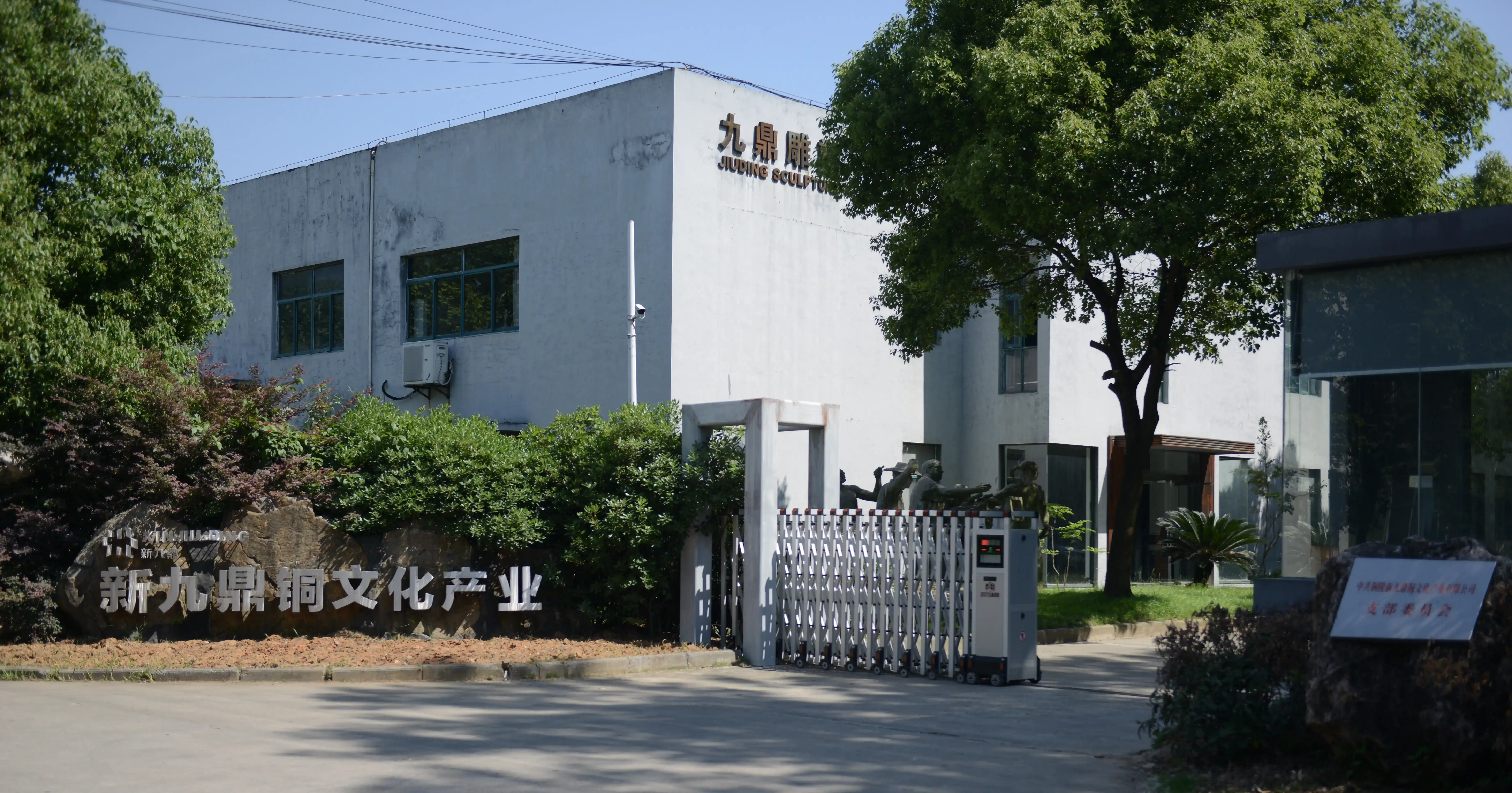
Based in Tongling, Anhui, China
Integrated design, engineering, production, and delivery support
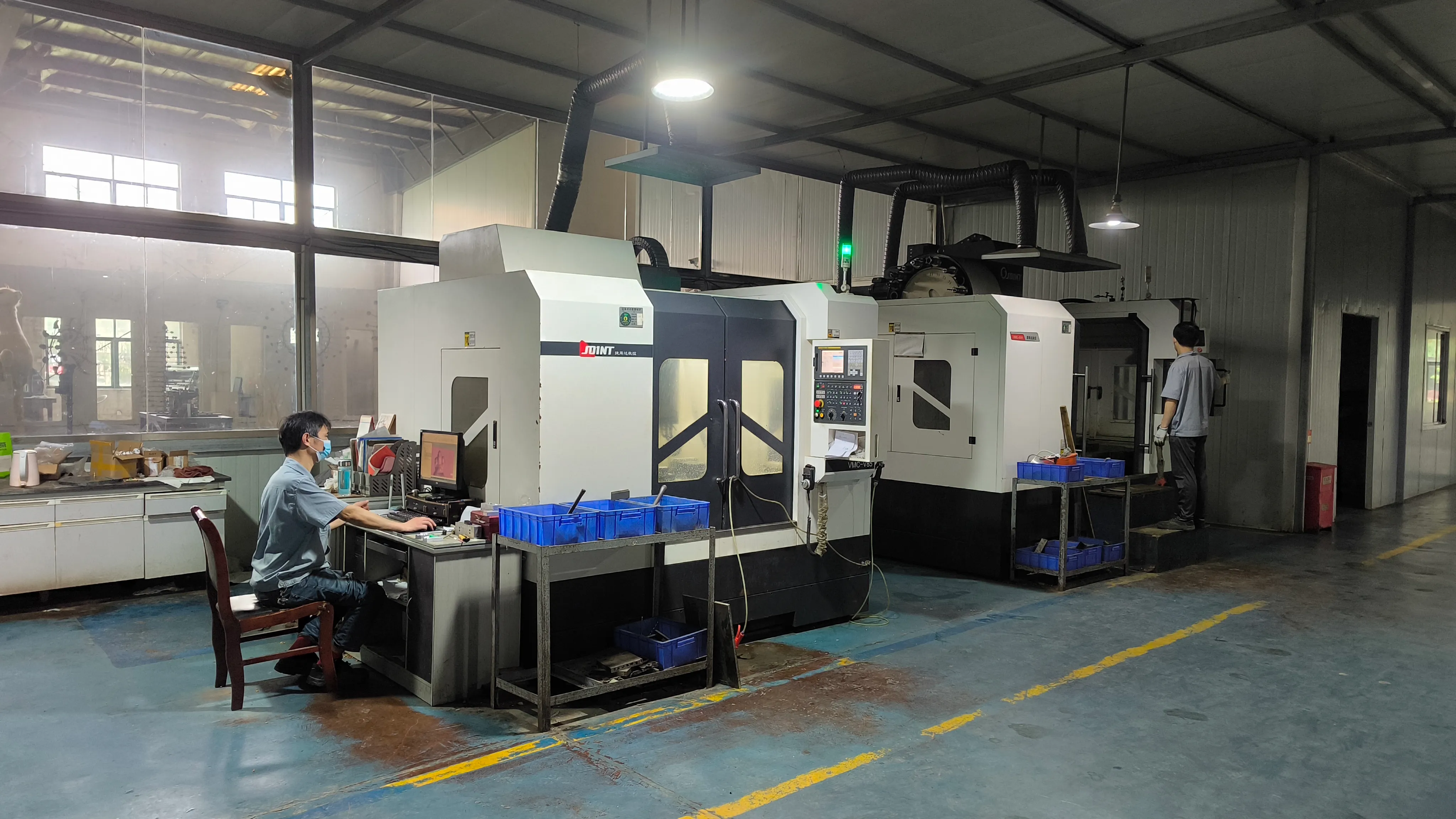
Xinjiuding workshop and production site in Tongling, China.
PEOPLE BEHIND THE WORK

The People Who Carry the Work Forward.

Artistic direction, design, engineering, project coordination, and production remain connected throughout each project. Different teams resolve different parts of the work, while important decisions are reviewed together.
Team members reviewing drawings and artistic development for a project.
01
Artistic Direction & Design
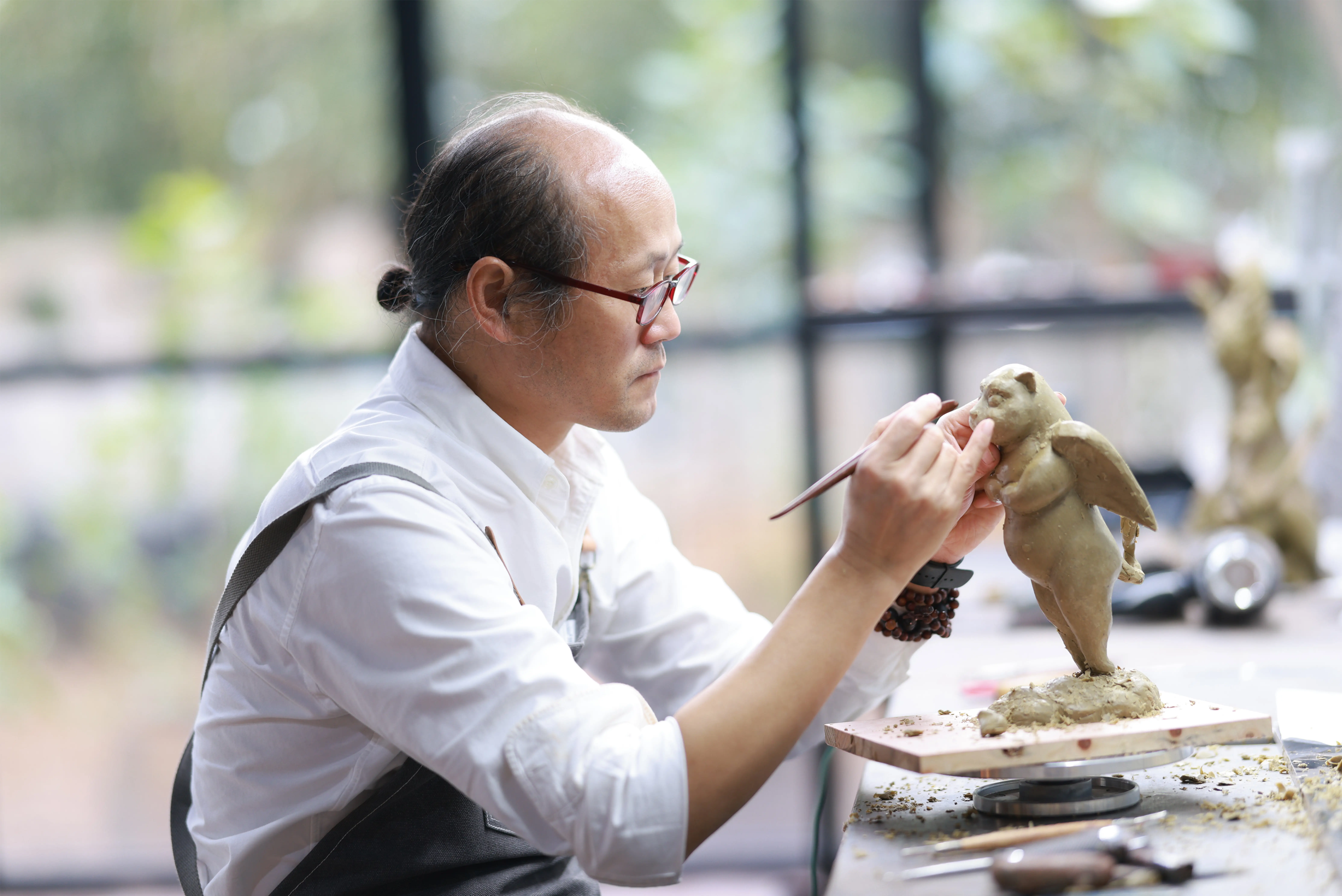
Artistic direction and design remain closely involved from the first discussion onward, helping clarify form, proportion, surface, and the character of the original work before production decisions are made.
Engineers and project coordinators discussing technical requirements for a metal artwork.
02
Engineering & Project Coordination
Our engineers translate the work into materials, internal structures, sectioning plans, fabrication methods, transport, and installation requirements in close dialogue with the creative and production teams.
Artisans fabricating and refining a large metal sculpture in the workshop.
03
Foundry & Fabrication
Experienced makers carry the work through mold making, casting, welding, chasing, finishing, assembly, and quality review. Their judgment at each stage shapes the final surface and presence of the work.
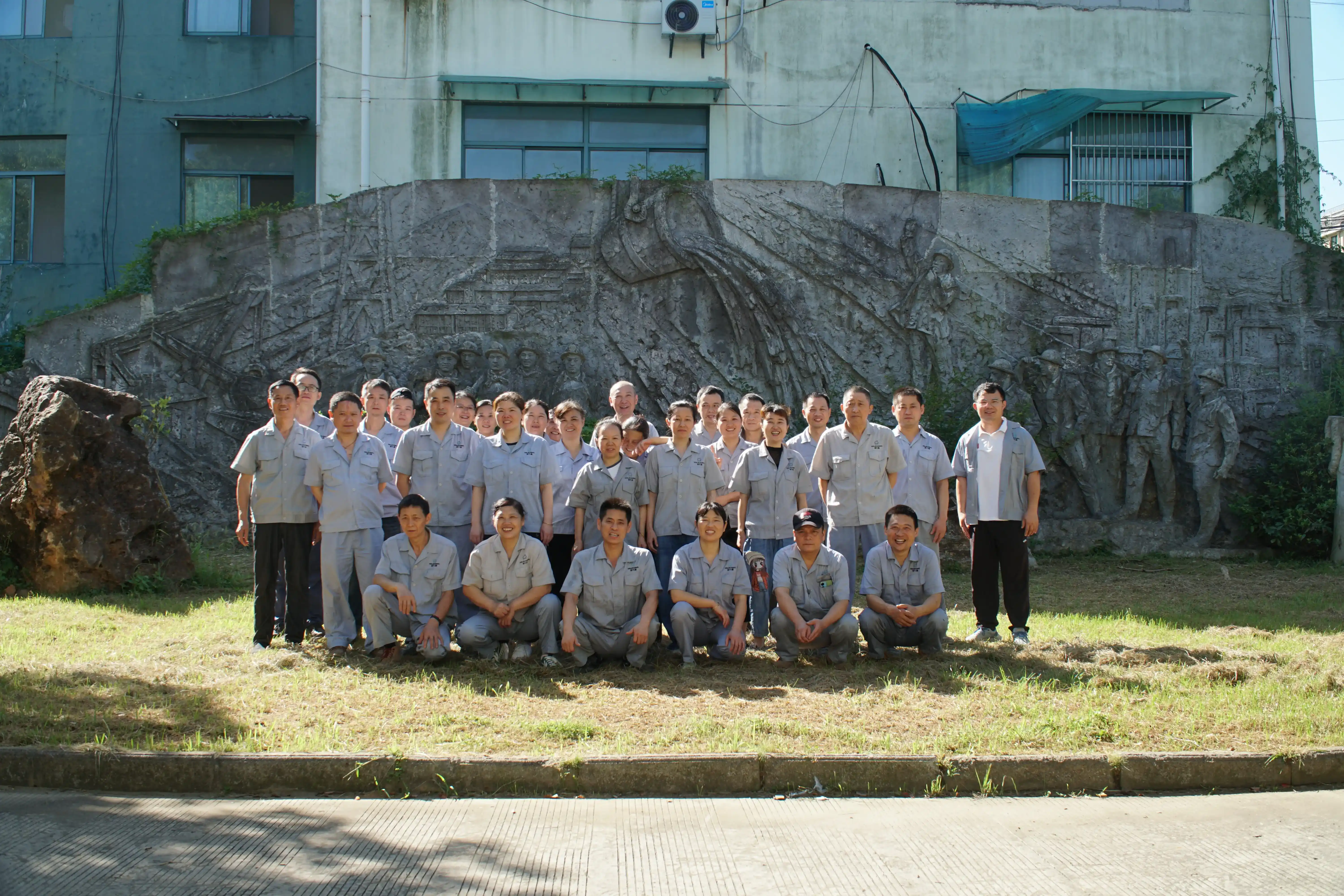
Xinjiuding foundry team gathered together in the Tongling workshop.
The Xinjiuding foundry team.
INSIDE THE FOUNDRY

Built for Work at Scale.

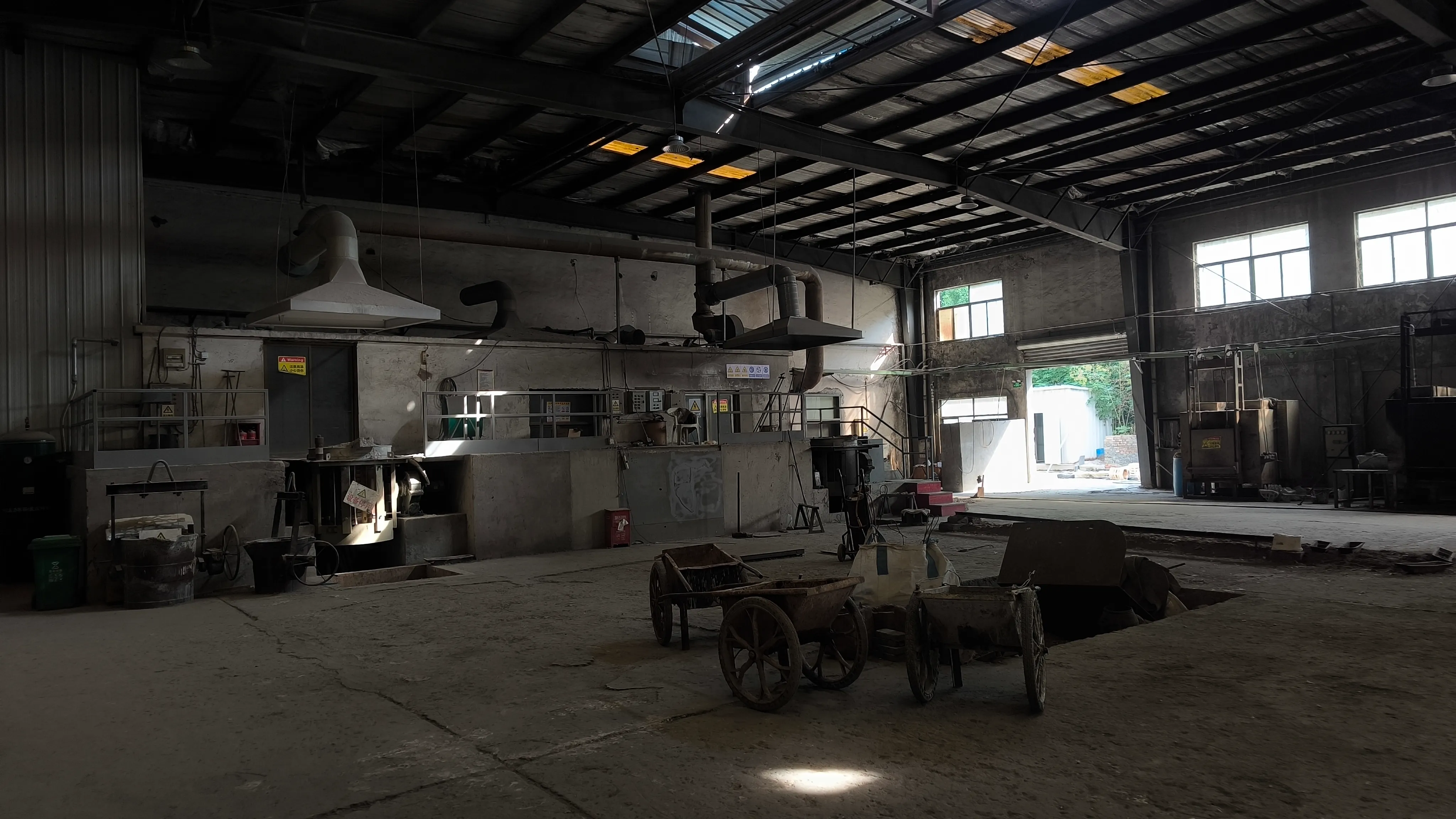
Xinjiuding’s site combines large workshops, specialized studios, and dedicated foundry zones for work at different scales.
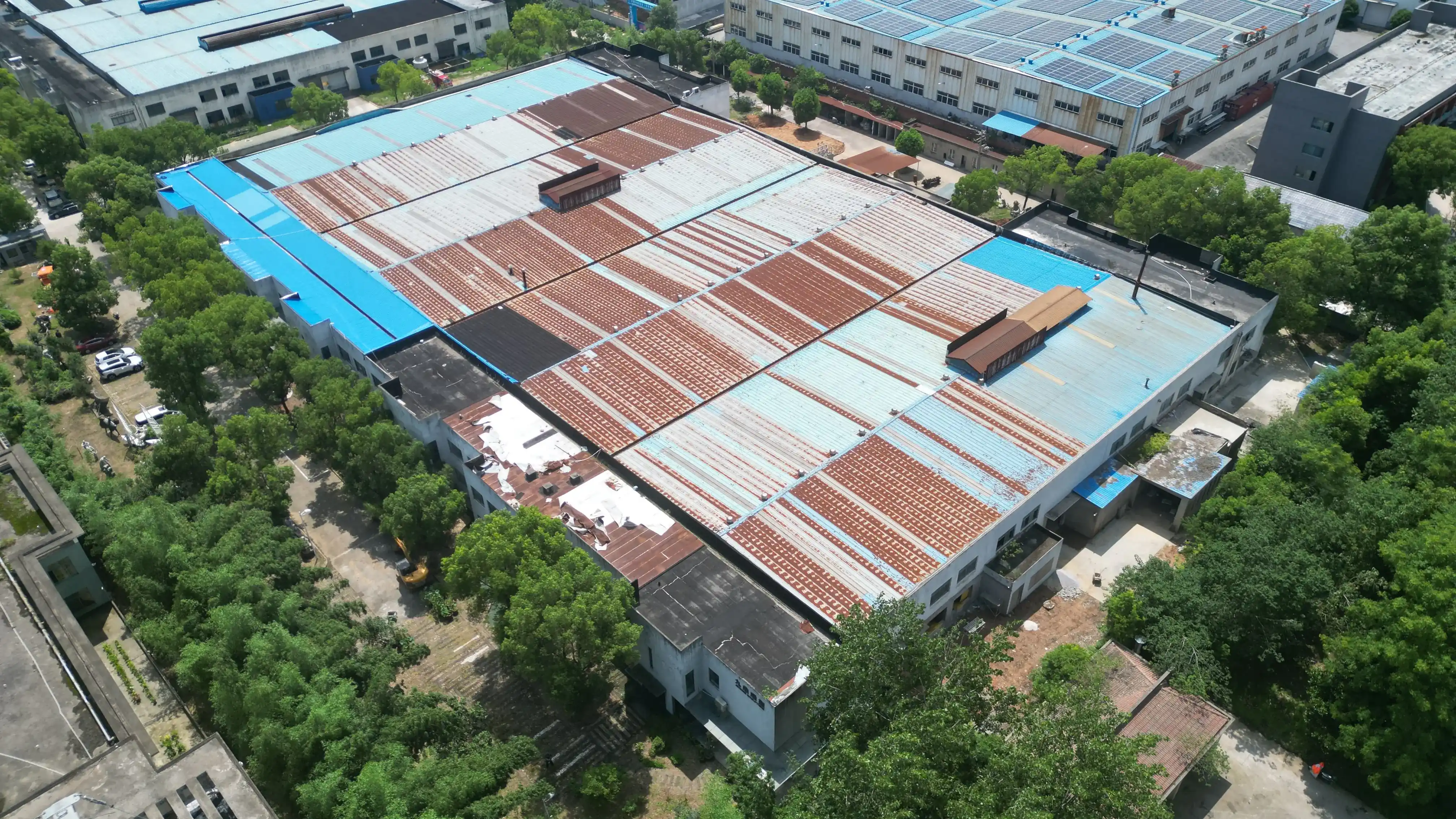
Aerial view of Xinjiuding’s multi-building production site in Tongling.
01
A Multi-Building Production Site
Connected facilities support projects across different scales and stages.
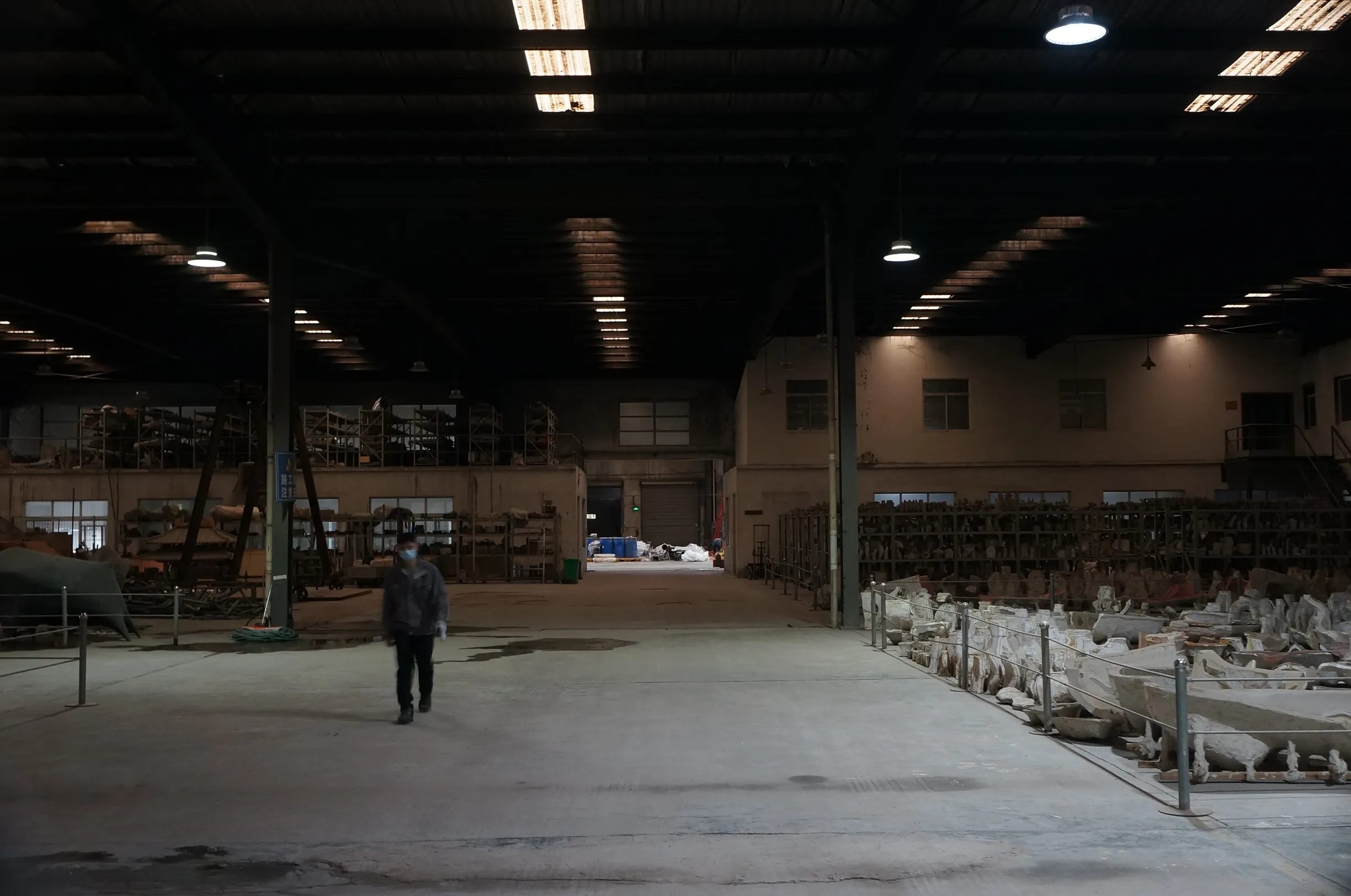
High-bay workshop with space for lifting and assembling large sculpture sections.
02
A Spacious Large-Scale Workshop
High-bay space supports lifting, welding, fitting, and full-scale assembly.
Multiple metal artworks progressing through production in the foundry.
03
A Dedicated Model Studio
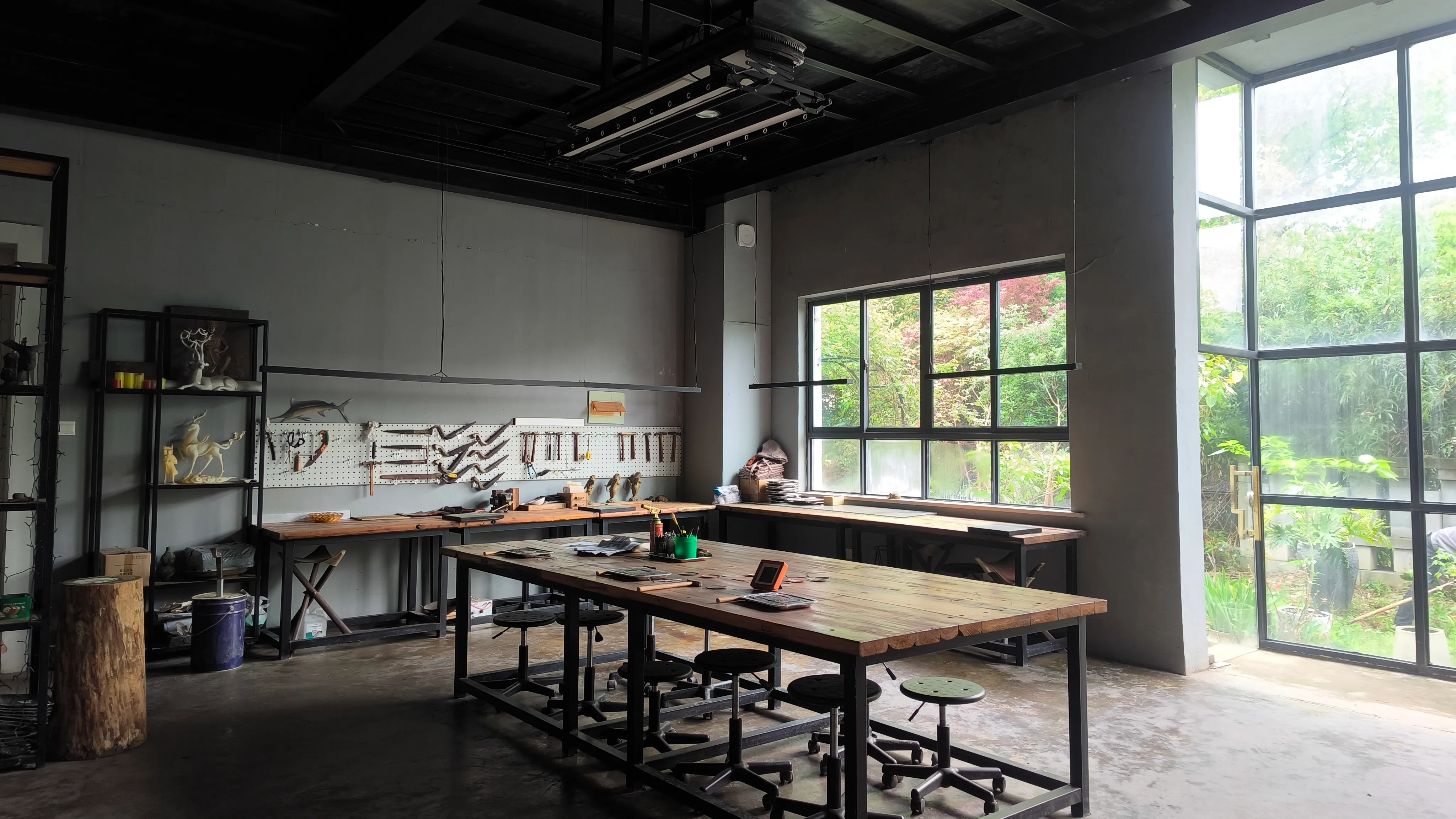
A focused workspace supports model making, detail work, and project review.
Workshop area used for final assembly, inspection, packing, and delivery preparation.
04
A Dedicated Melting Area
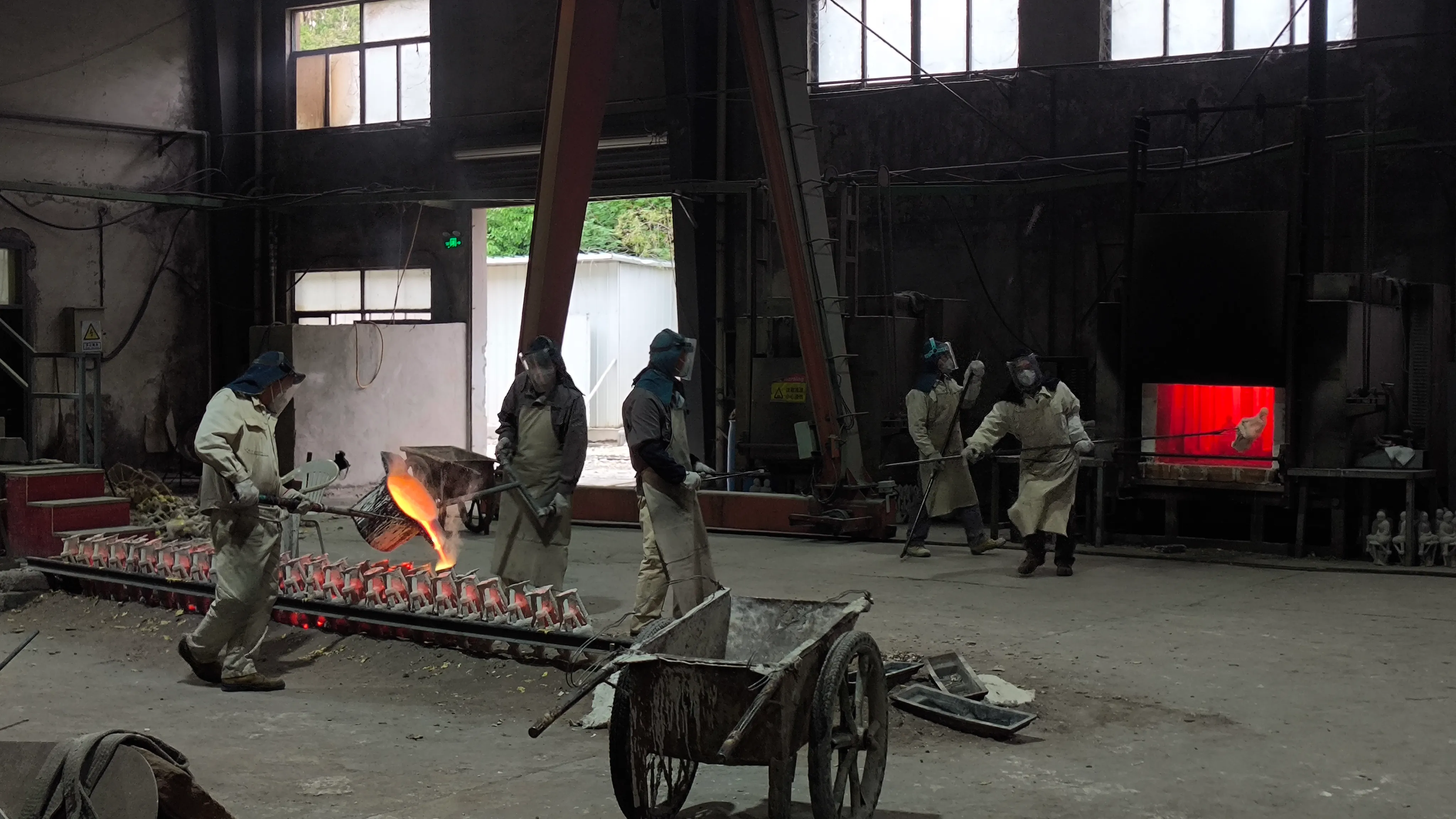
A separate furnace zone supports bronze melting, preparation, and pouring.
Traditional lost-wax casting and bronze reconstruction at Xinjiuding
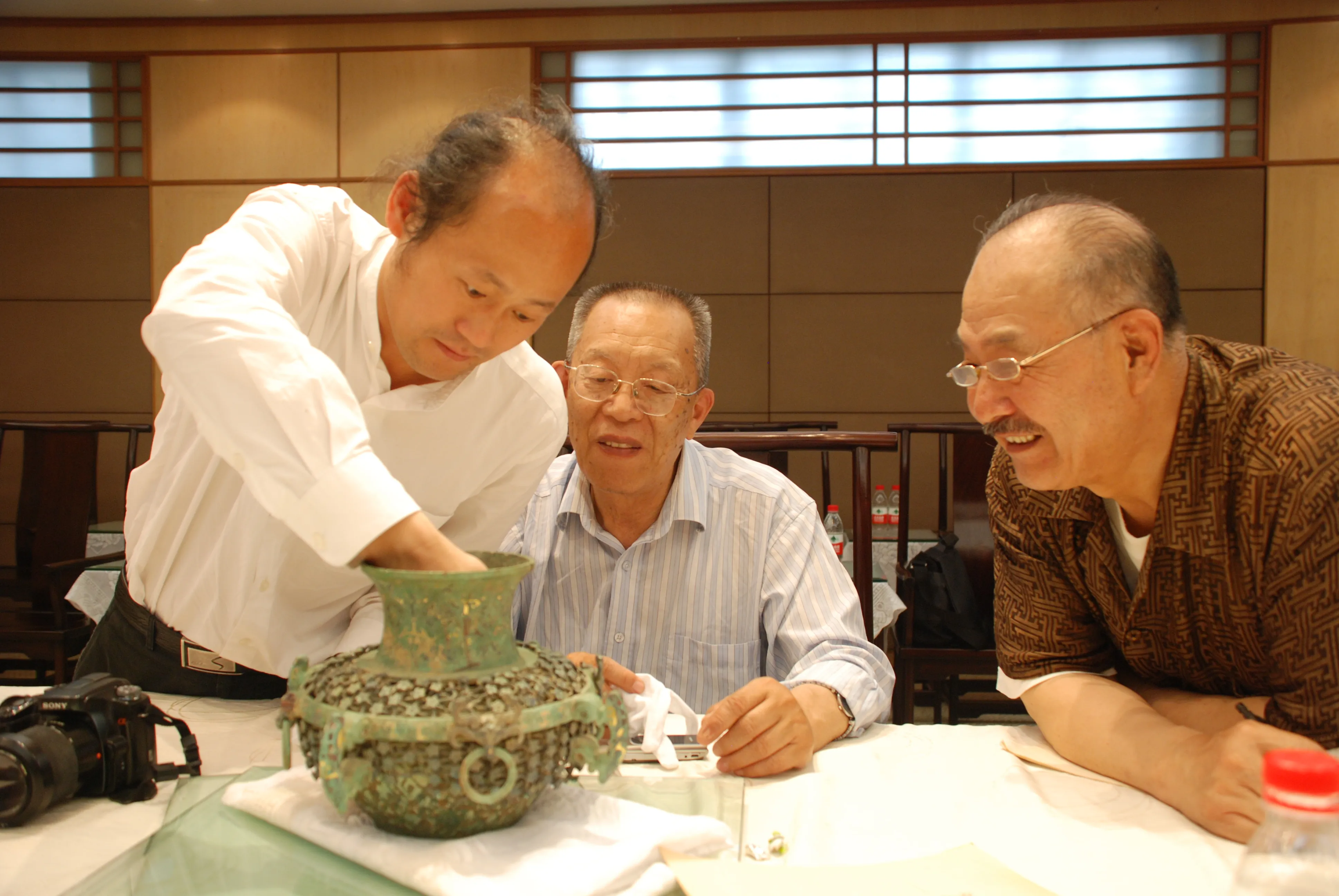
Zheng Dongping of Xinjiuding (left) and Professor Hua Jueming (center) examine the Chen Zhang Hu during a technical discussion on its structure, decorative details, and reconstruction process.
HERITAGE & RESEARCH

Traditional Knowledge, Applied to Contemporary Work.

Xinjiuding draws on traditional lost-wax casting while combining research, digital development, and modern fabrication to realize complex bronze works and reconstruction projects.
01
Traditional Lost-Wax Casting
Traditional lost-wax methods remain part of Xinjiuding’s technical foundation, supporting complex forms, detailed surfaces, and research into historical bronze-making practices.
02
Research-Based Reconstruction
Projects such as the reconstruction of the Chen Zhang Hu combine object study, structural analysis, technical experimentation, and bronze craftsmanship.
View the Bronze Reconstruction →
ROOTED IN TONGLING

Rooted in China’s Copper City.

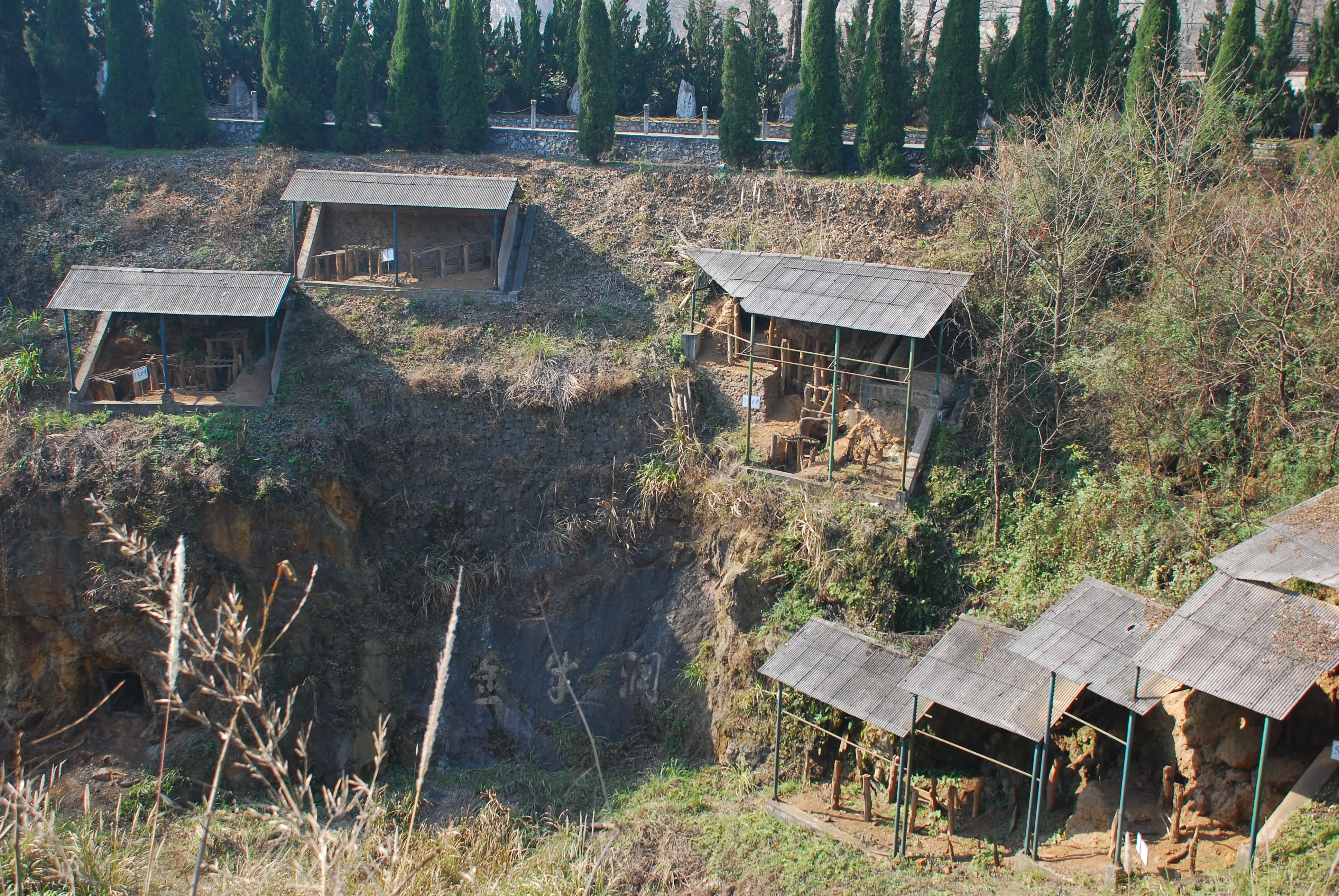
Xinjiuding is based in Tongling, Anhui, where copper mining, metallurgy, and metalworking have shaped the region for more than three millennia. Ancient mining remains provide a physical record of this history, while the city’s materials, skilled workforce, and manufacturing network continue to support metal production today.

Located on the lower Yangtze and connected to the wider Yangtze River Delta, Tongling provides practical access to Nanjing, Shanghai, Hangzhou, Suzhou, and the cultural, engineering, and commercial networks of eastern China.
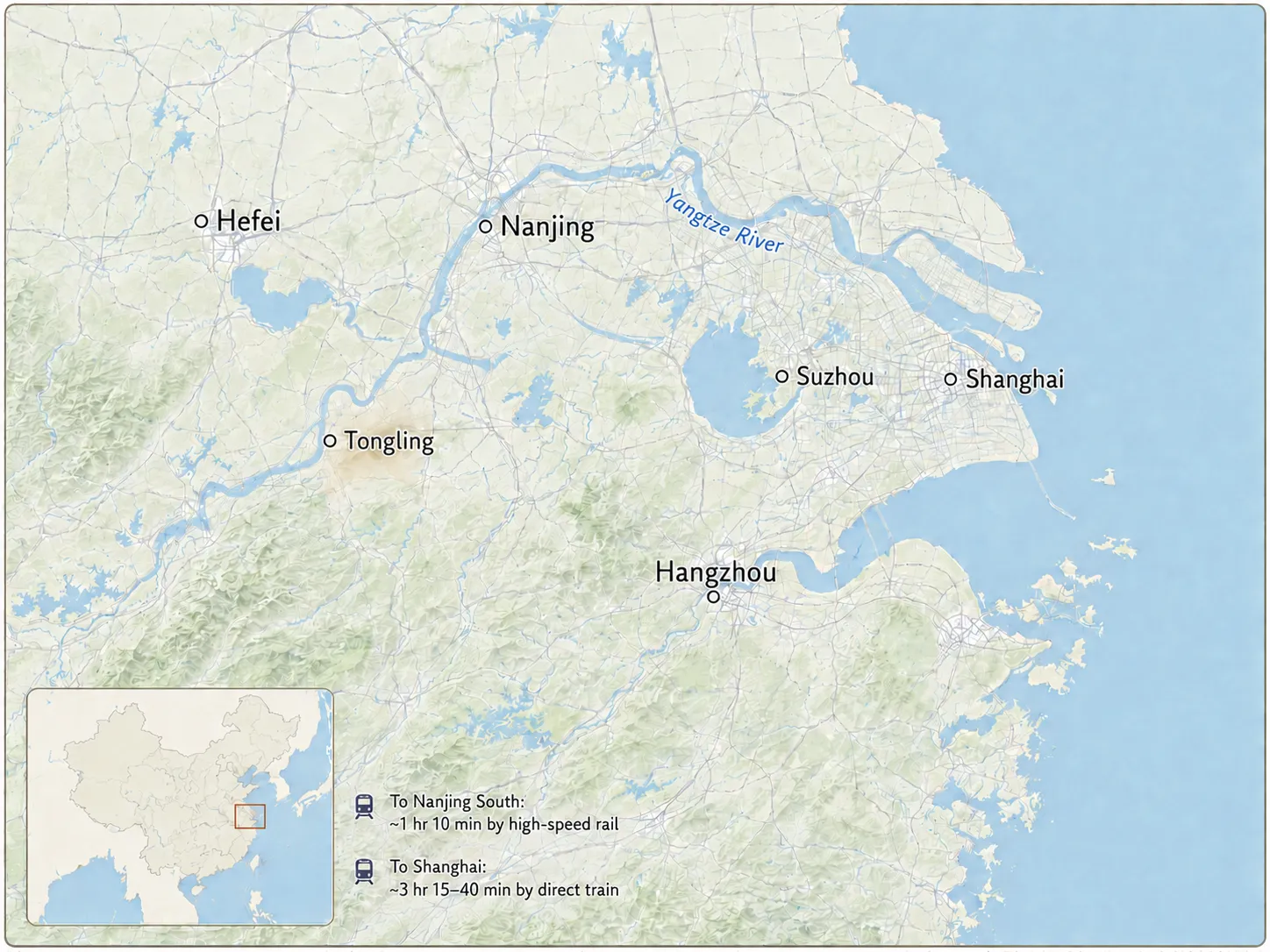
Map showing Tongling within the wider Yangtze River Delta network.
Tongling within the wider Yangtze River Delta network.
Ancient copper-mining remains in the Tongling region.

Discuss Your Project

Tell us about the work, its current stage, dimensions, materials, site, and timeline.