
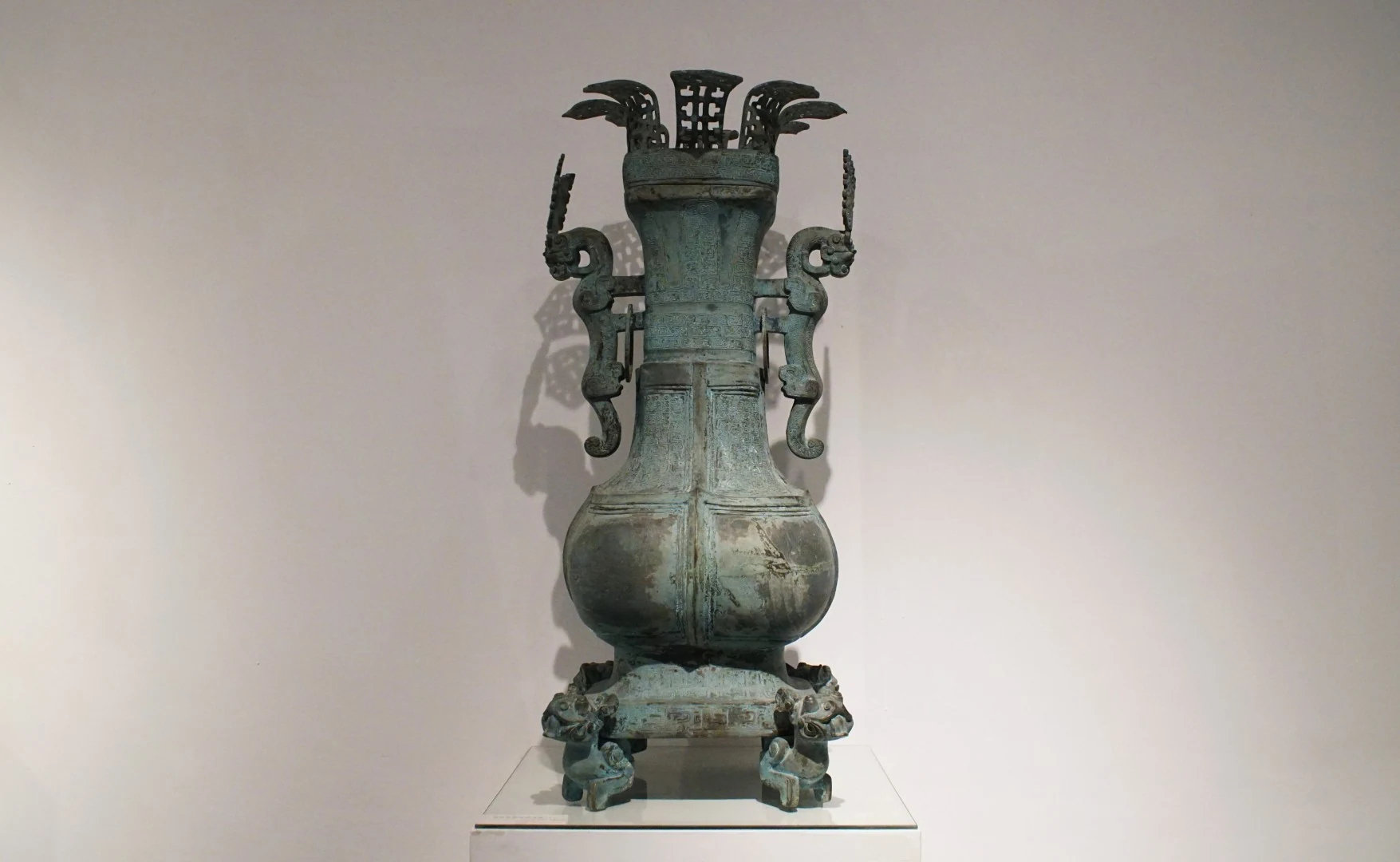
Cai Hou Square Hu
We studied the lid, body and animal-form feet to understand the proportions and ornament of this ritual bronze.
History of the original
The Cai Hou Square Hu belongs to the ritual bronze tradition of the late Spring and Autumn period. Related originals were excavated from the tomb of the Marquis of Cai in Shouxian, Anhui, in 1955. Inscriptions identify Marquis Shen of Cai, also known as Marquis Zhao. The National Museum of China relates the vessel’s form and ornament to Chu culture and its lotus-petal lid to styles associated with the Three Jin states.
Our practice
In our reproduction work on the Cai Hou Square Hu, we considered overall proportion alongside individual details. The opening of the lotus-petal lid, the meeting of handles and body, the layered ornament and the posture of the animal-form feet all contribute to its character. Studying them from different angles helped us keep the complete form in view.
Practice
Artefact study and reproduction
Form
Square hu with a lotus-petal lid
Focus
Proportion, ornament and structure
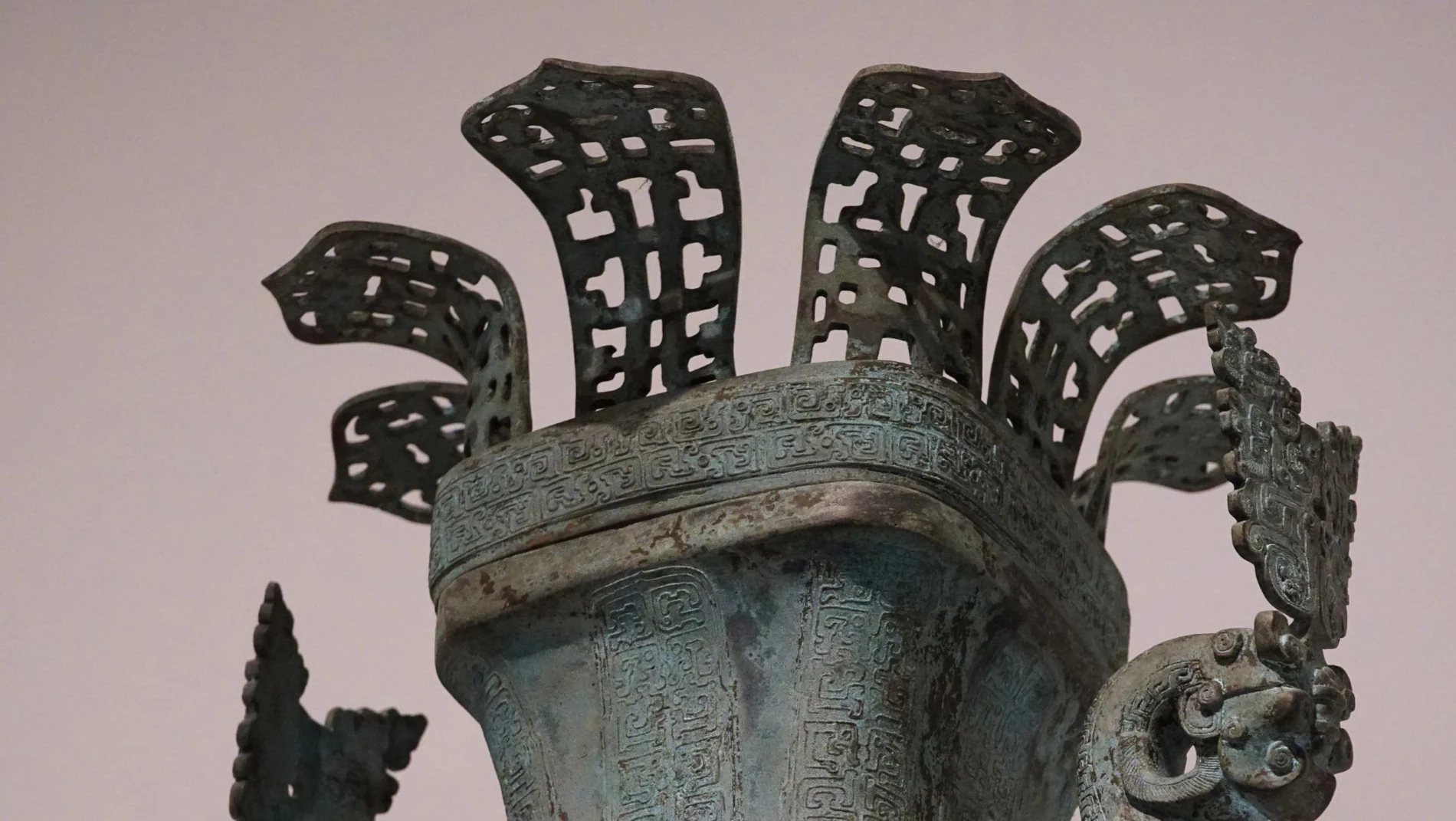
The lid and overall silhouette
We studied the relationship between the spreading lotus-petal lid and the body. The lid shapes the silhouette as well as providing ornament, so its individual details have to be considered within the whole.

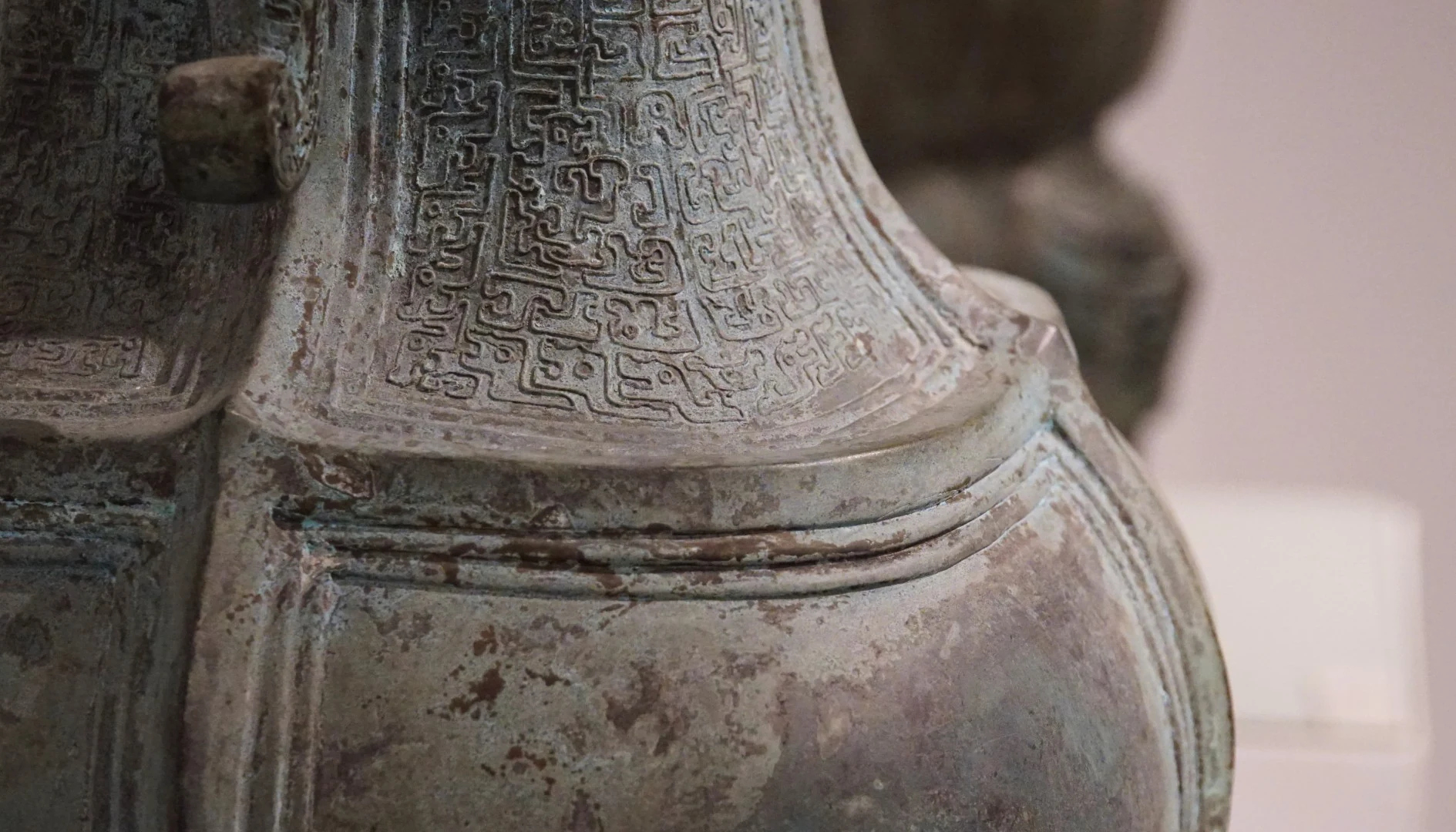
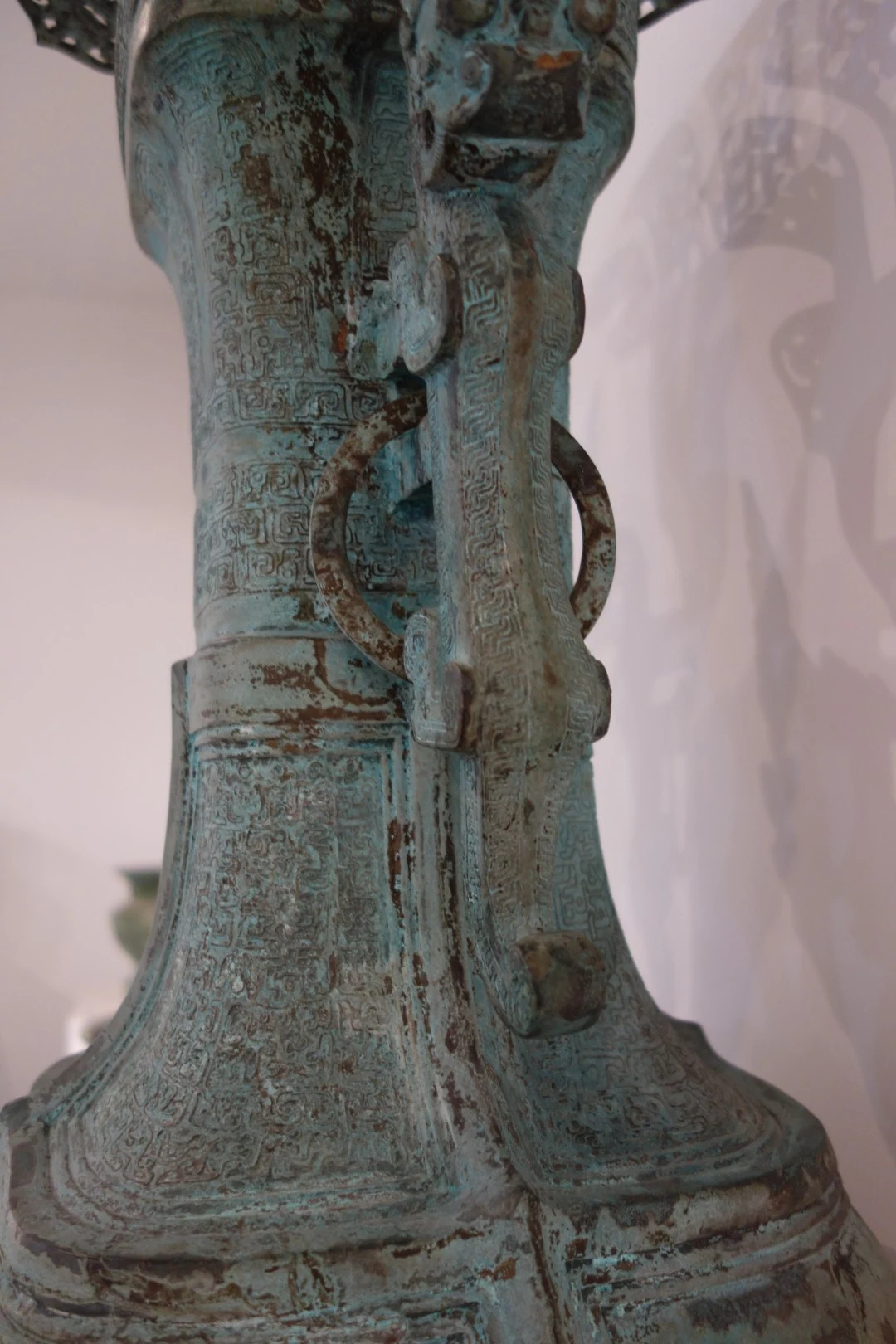
Handles and surface detail
We looked closely at the handles, body curves and ornament, paying attention to relief, changes of direction and connections. Each detail has its own demands, while contributing to a coherent vessel.
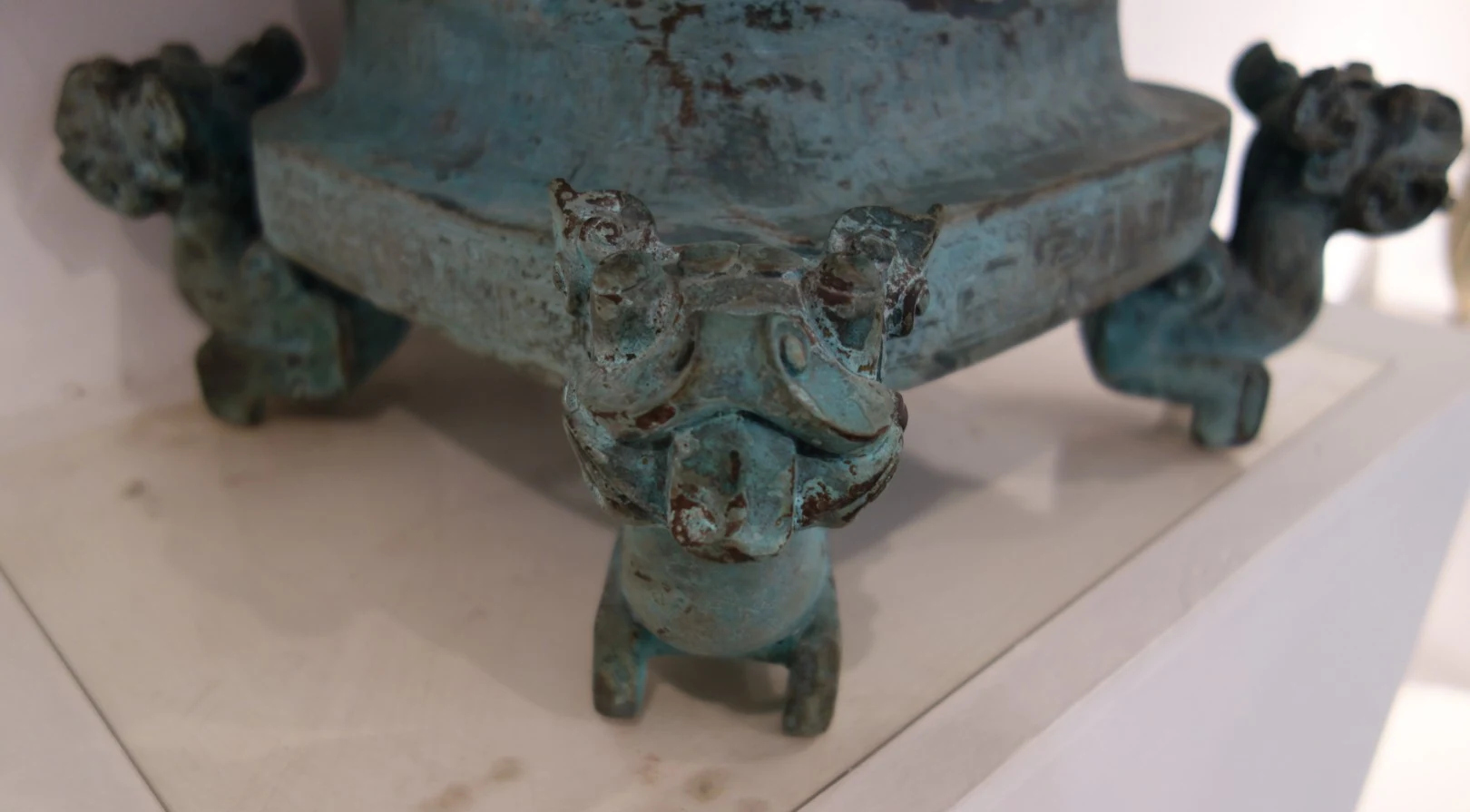
Animal-form feet and the balance of the form
We considered the animal-form feet within the complete vessel. Their posture and placement relate to the upper silhouette, returning our study of individual details to proportion and visual balance.